Invest
The multigenerational home moves mainstream: where the next margin lives in Australian real estate
Invest
The multigenerational home moves mainstream: where the next margin lives in Australian real estate
Multigenerational living is shifting from edge case to core demand driver in Australia’s housing market. For agents, developers and lenders, the commercial upside lies in rethinking product design, pricing, marketing and services for families that want independence and proximity under one roof. With supply constraints persisting and affordability pressure intensifying, early movers can build durable advantage in a segment that touches property, finance, care, retail and tech. The playbook: design for flexible separability, market with precision, and monetise new revenue streams across the home lifecycle.
The multigenerational home moves mainstream: where the next margin lives in Australian real estate

Multigenerational living is shifting from edge case to core demand driver in Australia’s housing market. For agents, developers and lenders, the commercial upside lies in rethinking product design, pricing, marketing and services for families that want independence and proximity under one roof. With supply constraints persisting and affordability pressure intensifying, early movers can build durable advantage in a segment that touches property, finance, care, retail and tech. The playbook: design for flexible separability, market with precision, and monetise new revenue streams across the home lifecycle.
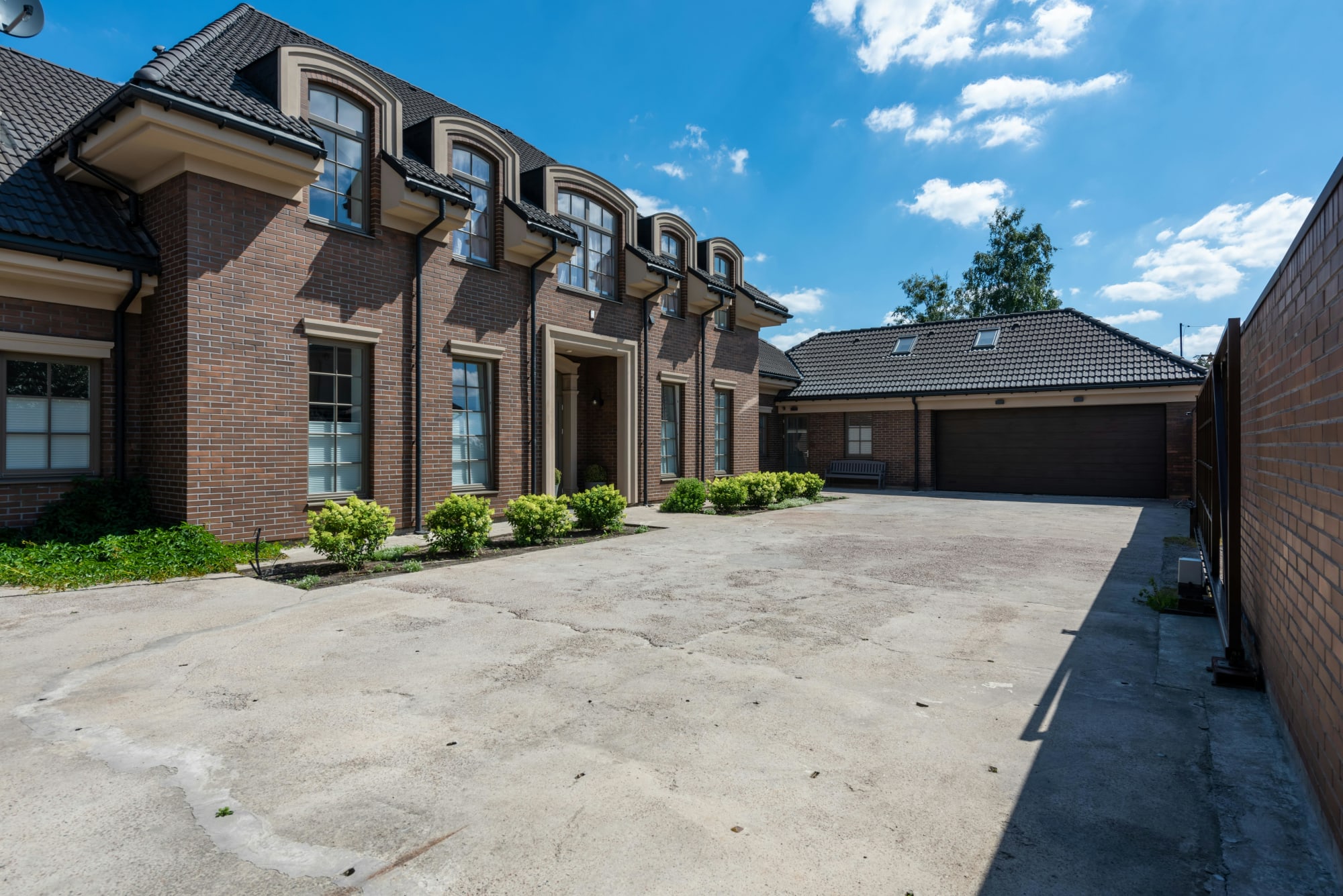
Key implication: Multigenerational living is no longer a quirky brief; it is a structural demand signal. Treat it as a new product category with distinct jobs-to-be-done—privacy, adaptability, and long-term affordability—and you unlock differentiated inventory, faster absorption and stickier client relationships.
Market context: affordability meets cultural preference
Australia’s housing system remains under supply pressure, a point underscored by the National Housing Supply and Affordability Council’s 2024 State of the Housing System report. When prices outpace incomes and rental vacancy tightens, families re-optimise: adult children stay longer, parents move in, and overseas-born households (who already exhibit higher rates of co-residence) normalise multi-generation arrangements. Sydney has been an early signal market, with developers reporting stronger enquiry for dual-living layouts since 2023. Layer in rising care costs and a preference for ageing in place, and the category pulls demand from both ends of the demographic barbell.
Crucially, this is not a transient cost-of-living hack. It is a durable consumer choice combining economic logic (shared mortgage and utilities), social cohesion, and risk management (built-in care options). That combination tends to endure across cycles.
Business impact: new revenue pools across the value chain
Agents: Beyond a marketing tweak, this is a listing strategy. Homes that credibly support multi-gen use—separate entries, a second kitchenette, acoustic separation—command a broader buyer pool and can cut days-on-market. Vendor advisory expands: modest pre-sale renovations (e.g., converting a ground-floor rumpus with bathroom rough-ins into a self-contained studio) can improve buyer fit and appraisal outcomes.
Developers and builders: Dual-key apartments, adaptable townhouses and houses with compliant secondary dwellings (granny flats) create tiered price points on a single lot. That de-risks pre-sales and can lift revenue per square metre. Offsite and modular secondary dwellings offer faster cycle times, appealing where trades are constrained.
Investors and landlords: A legal secondary dwelling can diversify income and reduce vacancy risk. While yields vary by suburb and compliance settings, the strategic principle is clear: two doors smooth cash flows and expand tenant segments (students, carers, intergenerational families).
Adjacent sectors: Insurers (multi-occupancy endorsements), retailers (fit-outs for second kitchens, accessibility upgrades), and in-home care providers (family carer support) all gain new product opportunities.
Competitive advantage: design for separability, not just space
The playbook for winning product borrows from human-centred design. The job-to-be-done is “together, separately”. That translates into five must-haves:
- Private ingress: a second entry or a semi-private lobby for part of the dwelling.
- Independent services: separate sub-metering where feasible; split-system zoning; sound insulation between zones.
- Light kitchens: plumbing and venting provisions to enable an upgrade from kitchenette to full kitchen (subject to code).
- Flexible partitions: structural provisions that allow converting a large primary suite into a micro-suite with living nook.
- Accessibility by design: step-free access, wider doorways and reinforced bathroom walls for future rails support ageing in place.
For agents, the edge lies in product-literate storytelling. Floorplans must highlight separability and circulation, not just square metres. For developers, options packaging (e.g., “Dual-Living Ready” upgrade bundles) simplifies buyer decisions and can add margin.
Technical deep dive: planning, compliance and buildability
Execution lives in the details. Secondary dwellings and dual-occupancy configurations engage local planning controls—setbacks, private open space, parking ratios and fire separation. Builders should plan for:
- Fire and acoustic performance: intertenancy-like separation (e.g., rated walls/ceilings) improves comfort and regulatory posture.
- Services routing: independent switchboards and sub-metering enable equitable cost sharing and downstream strata potential (where permitted).
- Moisture and odour control: additional bathroom/kitchen zones require careful ventilation design to avoid IAQ issues.
- Digital infrastructure: robust Wi-Fi zoning and smart locks support separate living while enabling shared services.
For ageing-in-place scenarios, safety tech—non-intrusive motion sensors, fall detection, and remote check-ins—adds value. These IoT layers create cross-sell opportunities for agents partnering with care-tech providers.
Demand generation: win the search, own the category
Multigenerational buyers are high-intent researchers. In digital, category leadership is a winner-takes-most game: the ACCC notes, “Google has maintained its position as the dominant search engine in Australia with a market share of nearly 94 per cent as recently as August [2024].” That puts a premium on search visibility for terms like “dual living”, “granny flat”, “secondary dwelling” and “dual-key apartment”.
For agencies and builders, the growth stack is straightforward:
- SEO/SEM: Dedicated landing pages with compliant floorplans, costed upgrade paths, and suburb-specific planning guidance.
- First-party data: Enquiry forms that capture family composition and intended use (elder care vs rental) to personalise follow-up.
- Content partnerships: Webinars with planners and certifiers to demystify approvals—trust is the conversion currency.
PropTech opportunity: Australia’s AI ecosystem shows a gap in commercialisation, but this is a tractable niche. Guided configurators that use preference data to generate compliant layouts could accelerate sales. The government’s AI Ethics Principles (2019) offer a governance baseline for using buyer data responsibly.
Implementation reality: financing, valuation and risk
Financing secondary dwellings or dual-key upgrades still trips buyers. Lenders vary in treatment of projected rental income and in construction draw processes. Agents can add value by connecting clients to brokers fluent in local policy and valuation comps. Insurance must be checked—some policies treat secondary dwellings as separate risk categories.
On valuation, evidence matters. Maintain a bank of settled comparables for dual-living homes in the catchment. For vendors, a light-value engineering approach—prioritising plumbing rough-ins, acoustic treatment and a separate entry over cosmetic upgrades—typically produces better appraisal conversations, because it tightens the property’s fit with a defined buyer segment.
Outlook: from retrofit to purpose-built—and a broader ecosystem
Expect today’s retrofit wave to give way to purpose-built stock as planning clarity improves and buyer expectations harden. Modular secondary dwellings will likely expand as councils streamline pathways and households seek faster, lower-disruption builds. Data-driven aftercare—maintenance plans, sensor-enabled safety, flexible leasing—creates recurring revenue beyond the transaction.
The strategic question is not “Is multigenerational living growing?” but “How do we own the category before it’s crowded?” As McKinsey’s State of Organizations puts it bluntly to leaders, “Are you ready to transform?” In this market, transformation is concrete: sharpen product, codify compliance, professionalise marketing and monetise services across the home’s lifecycle.
Action plan for decision-makers
- Portfolio strategy: Set a target share of dual-living-ready listings or projects (e.g., 20–30 per cent over 18 months) and build the pipeline.
- Design standards: Publish a firm-wide “Dual-Living Design Spec” covering entries, services, acoustics and accessibility.
- Go-to-market: Own the search terms; produce suburb-specific planning guides; train teams in category language.
- Ecosystem partnerships: Align with modular builders, care-tech providers and finance brokers to de-risk execution.
- Metrics: Track enquiry mix (multi-gen intent), days-on-market, upgrade attach rates and post-sale satisfaction for continuous improvement.
RELATED ARTICLES

Property
Australian property’s quiet pivot: resilience hides a new competitive map
Australia’s housing market remains sturdier than the macro noise suggests, but the sources of resilience have shifted. For operators, the profit pool is migrating from ‘volume at any price’ to ...Read more

Property
Gen Z’s 5% deposit rush: how policy‑driven demand is reshaping Australia’s housing value chain
A government-backed 5% deposit guarantee has triggered a surge in first-home buyer intent among Gen Z, pulling forward demand and resetting competition across banks, brokers and buildersRead more

Property
Cautious bidders, smarter sellers: a Queensland auction case study on repricing risk
Queensland’s auction market has hit a caution cycle as buyers price in higher borrowing costs, global uncertainty and cost-of-living pressure. Clearance softness is forcing agencies to re-engineer ...Read more

Property
Trust, technology and triage: what NSW’s ‘name and shame’ signals for real estate governance
NSW’s latest enforcement action on real estate trust accounts isn’t a one-off embarrassment; it’s a stress test of sector governance. With licences suspended and penalties applied, the message is ...Read more

Property
Vacancy is rising, demand is resilient: A case study in defending yield as Australia’s rental cycle rebalances
After a blistering run, Australia’s rental market is loosening at the edges. Vacancy is edging up off historic lows, rent inflation is set to moderate into 2026, yet underlying demand remains ...Read more

Property
Don’t lose the deposit: A case study in stopping real estate payment fraud — and the ROI for doing it
Deposit redirection scams are quietly eroding buyer savings and agency reputations in Australia’s property market. This case study unpacks how a mid-tier real estate group redesigned its settlement ...Read more

Property
The $12m threshold: Why portfolio value, not property count, now defines Australia’s investor elite
The old yardstick of six properties as shorthand for investment success has been overtaken by a harsher reality: in today’s market, elite status is defined by balance-sheet strength, not asset countRead more

Property
From intuition to instrumentation: How a "two-stakeholder" sales playbook lifted close rates and cut cycle times
High-stakes consumer purchases are increasingly joint decisions. When one partner is under-served, deals stall. This case study follows an Australian real estate group that rebuilt its sales motion ...Read more
Property
Australian property’s quiet pivot: resilience hides a new competitive map
Australia’s housing market remains sturdier than the macro noise suggests, but the sources of resilience have shifted. For operators, the profit pool is migrating from ‘volume at any price’ to ...Read more
Property
Gen Z’s 5% deposit rush: how policy‑driven demand is reshaping Australia’s housing value chain
A government-backed 5% deposit guarantee has triggered a surge in first-home buyer intent among Gen Z, pulling forward demand and resetting competition across banks, brokers and buildersRead more
Property
Cautious bidders, smarter sellers: a Queensland auction case study on repricing risk
Queensland’s auction market has hit a caution cycle as buyers price in higher borrowing costs, global uncertainty and cost-of-living pressure. Clearance softness is forcing agencies to re-engineer ...Read more
Property
Trust, technology and triage: what NSW’s ‘name and shame’ signals for real estate governance
NSW’s latest enforcement action on real estate trust accounts isn’t a one-off embarrassment; it’s a stress test of sector governance. With licences suspended and penalties applied, the message is ...Read more
Property
Vacancy is rising, demand is resilient: A case study in defending yield as Australia’s rental cycle rebalances
After a blistering run, Australia’s rental market is loosening at the edges. Vacancy is edging up off historic lows, rent inflation is set to moderate into 2026, yet underlying demand remains ...Read more
Property
Don’t lose the deposit: A case study in stopping real estate payment fraud — and the ROI for doing it
Deposit redirection scams are quietly eroding buyer savings and agency reputations in Australia’s property market. This case study unpacks how a mid-tier real estate group redesigned its settlement ...Read more
Property
The $12m threshold: Why portfolio value, not property count, now defines Australia’s investor elite
The old yardstick of six properties as shorthand for investment success has been overtaken by a harsher reality: in today’s market, elite status is defined by balance-sheet strength, not asset countRead more
Property
From intuition to instrumentation: How a "two-stakeholder" sales playbook lifted close rates and cut cycle times
High-stakes consumer purchases are increasingly joint decisions. When one partner is under-served, deals stall. This case study follows an Australian real estate group that rebuilt its sales motion ...Read more