




Invest
More than 1,000 multi-millionaires call Sydney home
Nearly 500 ultra-high-net-worth individuals call Sydney their second-home, brushing shoulders with the 570 who live in the sunny city full-time.
More than 1,000 multi-millionaires call Sydney home

Nearly 500 ultra-high-net-worth individuals call Sydney their second-home, brushing shoulders with the 570 who live in the sunny city full-time.

According to the latest Wealth-X ultra-high-net-worth individuals (UHNWI) cities census, Sydney is home to 1,048 UHNWIs. However, this group – worth at least US$30 million each – may have homes in other cities as well.
According to Wealth-X, “Most geographic analyses of the UHNWI population use the primary business, or ‘primary’ residential address, as a sole indicator to categorise the geographic breakdown of the individuals.
“While this approach provides an accurate assessment of population, it does not account for the fact that ultra-wealthy individuals often have multiple homes and business interests in multiple locations.”
As such, Wealth-X’s methodology includes all residential addresses of these individuals.
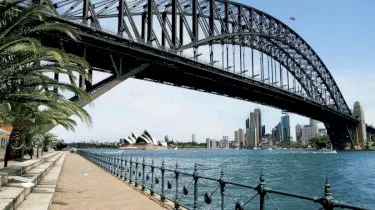
New York tops the list of cities where UHNWIs own homes, with 14,574 individuals, followed by London (9,301), Los Angeles (8,272) and Hong Kong (8,009).
Sydney slid into 20th position on the list, ahead of Monaco (686 UHNWIs), Dubai (552) and Beijing (997).
However, as the only Australia city to enter the list, Sydney was beat out by Paris (4,663) Toronto (2,021), Chicago (3,896) and Milan (1,731).
Mumbai (422) and New Delhi (305) have the least out of the list.
Breaking it down by density the story, unsurprisingly, changes.
Monaco, historic home to Grace Kelly and Roger Moore has just 56 residents to each UHNWI, followed by Geneva, with 221 residents to every UHNWI.
Sydney falls down two spots when measuring by UHNW density, with 4,790 residents to each UHNWI.
However, the densely populated cities of Mumbai and New Delhi means there are 50,249 and 62,438 people respectively to the growing number of UHNWIs in those cities.
The Dharavi slum in Mumbai is the second-largest slum in Asia, with an estimated population of 1 million people.
Meanwhile, the toxic Delhi smog in November saw air remain at “hazardous” levels for a week and, according to pulmonary disease specialist JC Suri, hurt the homeless and slum dwellers the most.
He told Reuters, “At these high levels, even the healthy are affected. The homeless and those on the streets are the most vulnerable, as they are not very healthy to begin with.
“They are exposed to construction dust, vehicle exhaust on a daily basis, and at this time of year, it gets worse.”
According to an Oxfam report published this year, eight men possess the same wealth as the poorest 3.6 billion people together.
To economist Dr Falko Paetzold of the Group for Sustainability and Technology, this disparity is “extreme” but also represents an opportunity to promote a “social and fair capitalism”.
Speaking earlier this year, Dr Paetzold said, “Private assets should become a key factor in sustainable development.”
Calling on private investors with assets worth more than $50 million to invest in sustainable practices, Dr Paetzold said, “Around 100 trillion Swiss francs – over half of global wealth – is held by significantly fewer than 1 per cent of the population.
“Imagine what could be achieved if this 1 per cent were to invest its capital in such a way as to combat poverty or climate change at the same time.”
However, he said charity was not the only solution. He noted that the promotion of fair supply chains, “scalable health solutions” and sustainable energy can be fuelled through sustainable investment.
Dr Paetzold said, “I am talking about sustainable investment as the wide spectrum of investments available today that have a business case, investments that generate returns both for the investor and for society.
“You can invest in companies that will use that capital to actively develop solutions to the challenges we face – and that are financially worthwhile.”
While the very wealthy are “very much” interested in the topic, Mr Paetzold said that despite nine out of 10 UHNWIs expressing interest in sustainable investments, just one out of 10 is “actually investing that way”.
Mr Paetzold said there is “enormous potential” for investors in terms of not only capital but also for their companies, their shareholders, their “position in society” and in their relationships.
RELATED ARTICLES

Property
Multigenerational living is moving mainstream: how agents, developers and lenders can monetise the shift
Australia’s quiet housing revolution is no longer a niche lifestyle choice; it’s a structural shift in demand that will reward property businesses prepared to redesign product, pricing and ...Read more

Property
Prestige property, precision choice: a case study in selecting the right agent when millions are at stake
In Australia’s top-tier housing market, the wrong agent choice can quietly erase six figures from a sale. Privacy protocols, discreet buyer networks and data-savvy marketing have become the new ...Read more
Property
From ‘ugly’ to alpha: Turning outdated Australian homes into high‑yield assets
In a tight listings market, outdated properties aren’t dead weight—they’re mispriced optionality. Agencies and vendors that industrialise light‑touch refurbishment, behavioural marketing and ...Read more

Property
The 2026 Investor Playbook: Rental Tailwinds, City Divergence and the Tech-Led Operations Advantage
Rental income looks set to do the heavy lifting for investors in 2026, but not every capital city will move in lockstep. Industry veteran John McGrath tips a stronger rental year and a Melbourne ...Read more
Property
Prestige property, precision choice: Data, discretion and regulation now decide million‑dollar outcomes
In Australia’s prestige housing market, the selling agent is no longer a mere intermediary but a strategic supplier whose choices can shift outcomes by seven figures. The differentiators are no longer ...Read more

Property
The new battleground in housing: how first-home buyer policy is reshaping Australia’s entry-level market
Government-backed guarantees and stamp duty concessions have pushed fresh demand into the bottom of Australia’s price ladder, lifting values and compressing selling times in entry-level segmentsRead more

Property
Property 2026: Why measured moves will beat the market
In 2026, Australian property success will be won by investors who privilege resilience over velocity. The market is fragmenting by suburb and asset type, financing conditions remain tight, and ...Read more

Property
Entry-level property is winning: How first home buyer programs are reshaping demand, pricing power and strategy
Lower-priced homes are appreciating faster as government support channels demand into the entry tier. For developers, lenders and marketers, this is not a blip—it’s a structural reweighting of demand ...Read more
Property
Multigenerational living is moving mainstream: how agents, developers and lenders can monetise the shift
Australia’s quiet housing revolution is no longer a niche lifestyle choice; it’s a structural shift in demand that will reward property businesses prepared to redesign product, pricing and ...Read more
Property
Prestige property, precision choice: a case study in selecting the right agent when millions are at stake
In Australia’s top-tier housing market, the wrong agent choice can quietly erase six figures from a sale. Privacy protocols, discreet buyer networks and data-savvy marketing have become the new ...Read more
Property
From ‘ugly’ to alpha: Turning outdated Australian homes into high‑yield assets
In a tight listings market, outdated properties aren’t dead weight—they’re mispriced optionality. Agencies and vendors that industrialise light‑touch refurbishment, behavioural marketing and ...Read more
Property
The 2026 Investor Playbook: Rental Tailwinds, City Divergence and the Tech-Led Operations Advantage
Rental income looks set to do the heavy lifting for investors in 2026, but not every capital city will move in lockstep. Industry veteran John McGrath tips a stronger rental year and a Melbourne ...Read more
Property
Prestige property, precision choice: Data, discretion and regulation now decide million‑dollar outcomes
In Australia’s prestige housing market, the selling agent is no longer a mere intermediary but a strategic supplier whose choices can shift outcomes by seven figures. The differentiators are no longer ...Read more
Property
The new battleground in housing: how first-home buyer policy is reshaping Australia’s entry-level market
Government-backed guarantees and stamp duty concessions have pushed fresh demand into the bottom of Australia’s price ladder, lifting values and compressing selling times in entry-level segmentsRead more
Property
Property 2026: Why measured moves will beat the market
In 2026, Australian property success will be won by investors who privilege resilience over velocity. The market is fragmenting by suburb and asset type, financing conditions remain tight, and ...Read more
Property
Entry-level property is winning: How first home buyer programs are reshaping demand, pricing power and strategy
Lower-priced homes are appreciating faster as government support channels demand into the entry tier. For developers, lenders and marketers, this is not a blip—it’s a structural reweighting of demand ...Read more