




Invest
RBA makes anticipated pre-election interest rate call
The RBA has announced its rate decision amid the highest inflation in decades.
RBA makes anticipated pre-election interest rate call


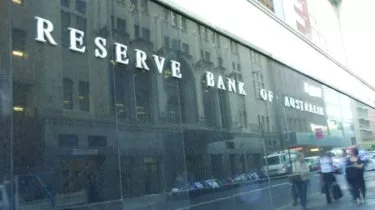
As a result of inflation levels not seen since the introduction of the GST in 2001, the Reserve Bank of Australia (RBA) has chosen to lift the cash rate from a record low 0.1 per cent to 0.35 per cent in its first rate hike in over a decade.
"The board judged that now was the right time to begin withdrawing some of the extraordinary monetary support that was put in place to help the Australian economy during the pandemic," governor Philip Lowe said in the bank's post-meeting statement.
"The economy has proven to be resilient and inflation has picked up more quickly, and to a higher level, than was expected. There is also evidence that wages growth is picking up. Given this, and the very low level of interest rates, it is appropriate to start the process of normalising monetary conditions," he added.
The board dumped its previous position that wages would be a key piece of data in any rate decision and heeded warnings that suggested a longer wait would severely endanger the Australian economy.
Last week, inflation spiked to its highest level in over two decades and while a blow out was predicted, economists didn’t quite expect such a sizable jump in both the headline and underlying inflation.
Market economists had pretty much put all their money on a June interest rate lift, but last Wednesday’s CPI data had pushed many to rethink their estimates, three of the big four banks included.
Westpac, NAB and ANZ all correctly predicted that the RBA would hit the rate button today.
Commenting on the bank’s decision – a decision that threatened to bring the bank’s credibility into question - Anneke Thompson, chief economist at CreditorWatch, said the RBA will now be keenly waiting on Wage Price Index data from the ABS and average earnings in the national accounts to decide on their next move.
“It is likely the board will maintain its position that this data will be a key informant in regards to the velocity of future rate rises,” Ms Thompson said.
“Even if upcoming wage data shows an increase on the current pace of growth of 2.3 per cent, it is a near impossibility that it will be anywhere near the latest inflation figure of 5.1 per cent. This means that the data is almost certain to show that real incomes are going backwards.
“Nevertheless, the RBA will take comfort if they see at least some momentum gaining in wages growth. If we see wage price growth with a 3 in front of it, this might push the RBA to move the cash rate more aggressively, to try and get the inflation spiral under control more quickly,” she noted.
Coming into Tuesday, many economists believed that the election would play on the minds of the RBA board, especially given the scenario of 2007.
Namely, coincidence or not, the last time that the RBA pulled the trigger during an election campaign, the incumbent Howard government promptly lost the vote. This had many pundits wiping beads of sweat off their foreheads ahead of today’s decision.
Asked whether he feels the jitters, PM Scott Morrison told reporters last week that the two situations are worlds apart.
"The first point to note is that in 2007, the cash rate was 6.5 per cent. Today, it is 0.1 per cent," Mr Morrison said.
"So, I think to draw an equivalence between those two issues would be to misunderstand history. They are very different situations.”
More to come
RELATED ARTICLES
-

Australia’s spending surprise raises the odds of a February rate move — here’s how to protect margin and momentum
-

Australia’s inflation cools to 3.4% — why the RBA’s next move still isn’t a lay‑up for business
-

Inflation cools to 3.4% — but the RBA’s reaction function keeps businesses on a knife-edge
About the author

About the author

Economy
Australia’s spending surprise raises the odds of a February rate move — here’s how to protect margin and momentum
Household outlays are running hotter than economists expected, with the latest ABS readings showing broad-based gains across services and goods. That resilience is exactly the kind of demand impulse ...Read more
Economy
Australia’s inflation cools to 3.4% — why the RBA’s next move still isn’t a lay‑up for business
Headline inflation easing is good optics; balance sheets feel something different. With year‑on‑year CPI down to 3.4% in November from 3.8%, hopes for rate relief are rising — but policymakers remain ...Read more
Economy
Inflation cools to 3.4% — but the RBA’s reaction function keeps businesses on a knife-edge
Australia’s headline CPI edged down to 3.4% year-on-year in November, from 3.8%, easing immediate pressure but not eliminating the risk of further tightening. With services inflation sticky and ...Read more

Economy
Higher-for-longer, not higher forever: How Australia’s inflation ‘surprise’ is rewriting CFO playbooks for 2026
Australia’s latest inflation pulse eased but didn’t budge bank outlooks: near‑term rate cuts are still a long shot, with some houses flagging upside risk. That steadier‑for‑longer cash rate is pushing ...Read more

Economy
Australia's inflation illusion: the real challenge lies in pricing power and productivity
Headline inflation has cooled to 3.4% year-on-year, but the Reserve Bank’s caution—and a still‑hot housing backdrop—mean the rate threat hasn’t left the room. For boards, the next few quarters are ...Read more

Economy
When house prices lift, tills ring: A case study in turning Australia’s wealth effect into growth
Australia’s latest upswing in household wealth, anchored by higher dwelling values, is more than a feel‑good statistic—it is a profit and planning signal. The ABS notes property’s centrality to ...Read more

Economy
RBA's hawkish stance reflects inflation concerns, State Street economist comments
In a recent statement, the Reserve Bank of Australia (RBA) has signaled a hawkish stance on interest rates, drawing insights from financial experts about the implications for Australia's economic ...Read more

Economy
Navigating the inflation maze: How CFOs can outsmart economic hurdles in Australia
Fresh inflation data have cooled expectations of near-term rate cuts in Australia, intensifying pressure on margins, capital allocation and demand. Rather than wait for monetary relief that may not ...Read more
Economy
Australia’s spending surprise raises the odds of a February rate move — here’s how to protect margin and momentum
Household outlays are running hotter than economists expected, with the latest ABS readings showing broad-based gains across services and goods. That resilience is exactly the kind of demand impulse ...Read more
Economy
Australia’s inflation cools to 3.4% — why the RBA’s next move still isn’t a lay‑up for business
Headline inflation easing is good optics; balance sheets feel something different. With year‑on‑year CPI down to 3.4% in November from 3.8%, hopes for rate relief are rising — but policymakers remain ...Read more
Economy
Inflation cools to 3.4% — but the RBA’s reaction function keeps businesses on a knife-edge
Australia’s headline CPI edged down to 3.4% year-on-year in November, from 3.8%, easing immediate pressure but not eliminating the risk of further tightening. With services inflation sticky and ...Read more
Economy
Higher-for-longer, not higher forever: How Australia’s inflation ‘surprise’ is rewriting CFO playbooks for 2026
Australia’s latest inflation pulse eased but didn’t budge bank outlooks: near‑term rate cuts are still a long shot, with some houses flagging upside risk. That steadier‑for‑longer cash rate is pushing ...Read more
Economy
Australia's inflation illusion: the real challenge lies in pricing power and productivity
Headline inflation has cooled to 3.4% year-on-year, but the Reserve Bank’s caution—and a still‑hot housing backdrop—mean the rate threat hasn’t left the room. For boards, the next few quarters are ...Read more
Economy
When house prices lift, tills ring: A case study in turning Australia’s wealth effect into growth
Australia’s latest upswing in household wealth, anchored by higher dwelling values, is more than a feel‑good statistic—it is a profit and planning signal. The ABS notes property’s centrality to ...Read more
Economy
RBA's hawkish stance reflects inflation concerns, State Street economist comments
In a recent statement, the Reserve Bank of Australia (RBA) has signaled a hawkish stance on interest rates, drawing insights from financial experts about the implications for Australia's economic ...Read more
Economy
Navigating the inflation maze: How CFOs can outsmart economic hurdles in Australia
Fresh inflation data have cooled expectations of near-term rate cuts in Australia, intensifying pressure on margins, capital allocation and demand. Rather than wait for monetary relief that may not ...Read more