




Invest
PM backs gas-powered economic recovery
Prime Minister Scott Morrison has outlined his vision for a gas-led economic recovery from the coronavirus pandemic, declaring the cheap and reliable power will help boost the economy.
PM backs gas-powered economic recovery

Prime Minister Scott Morrison has outlined his vision for a gas-led economic recovery from the coronavirus pandemic, declaring the cheap and reliable power will help boost the economy.

During the national energy address on Tuesday, 15 September, the PM highlighted the importance of gas as a pillar of his JobMaker plan, with affordable electricity taking the burden off families and businesses.
The Prime Minister said gas and coal remained critical to meeting the nation’s growing energy demands and supporting the economic recovery through job creation.
“Now lower cost and more reliable energy helps businesses to grow and employ more people. And in areas like the Hunter, the business of generating energy is, for so many, your livelihood, where critical energy-intensive jobs are located,” Mr Morrison said.
“Affordable and more reliable energy also supports household budgets, and that enables Australians to keep more of what they earn, whatever their source of income is.”
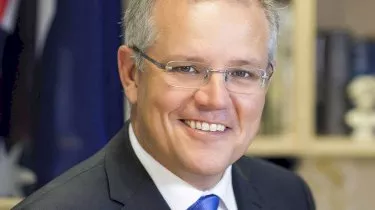
As part of this plan, Mr Morrison explained how with or without private investment, the Australian government would look to increase the supply of gas.
“To ensure affordable reliable power, we need the market to deliver 1,000 megawatts of new dispatchable capacity by the summer of 2023-2024, with final investment decisions by the end of April 2021,” Mr Morrison said.
“If the energy companies choose to step up and make these investments to create that capacity, great, we will step back. If not, my government will step up and we will fill the gap.
“To this end, the Snowy Hydro is already developing options to build a gas generator in the Hunter Valley should the market not deliver.”
Mr Morrison also pointed to cheaper energy sources, including coal, as a cheap energy supply while creating Australian jobs.
“Coal will continue to play an important role in our economy for decades to come. With new technologies such as carbon capture and storage continuing to improve, it will have an even longer life, not just here in Australia, but in our export markets as well. Right here, and in regions like right here, that means jobs.”
“My government understands this. The fact that we understand it is important. So many of your livelihoods depend on it. And not everyone shares this view. Not everyone shares our views on this,” Mr Morrison said.
Critics have hit back at Mr Morrison’s plans, with Greens leader Adam Bandt telling Australians, “We must fight Scott Morrison’s gas-fuelled climate collapse,” he said on Twitter.
“But by all means, back a gas-fuelled recovery and ditch 2030 climate targets, Lib & Lab,” Mr Bandt said.
However, Mr Morrison addressed these concerns in his speech, highlighting the change towards renewable generation.
“This is not something we have sought to hold back, rather we have encouraged it. And it is also benefiting jobs here in the Hunter and in regions like it. It is not a choice between the two,” Mr Morrison said.
“More than $30 billion was invested in renewables between 2017 and mid 2020. In 2019, we saw investment at more than three times the per capita rate of countries like Germany, China or France.
“Across 2019 and 2020, Australia will add more than 12.6 GW of renewable capacity – over four times that of our largest power station. Nearly one in four households has rooftop solar systems,” the Prime Minister concluded.
RELATED ARTICLES
-

Australia’s spending surprise raises the odds of a February rate move — here’s how to protect margin and momentum
-

Australia’s inflation cools to 3.4% — why the RBA’s next move still isn’t a lay‑up for business
-

Inflation cools to 3.4% — but the RBA’s reaction function keeps businesses on a knife-edge
About the author

About the author

Economy
Australia’s spending surprise raises the odds of a February rate move — here’s how to protect margin and momentum
Household outlays are running hotter than economists expected, with the latest ABS readings showing broad-based gains across services and goods. That resilience is exactly the kind of demand impulse ...Read more
Economy
Australia’s inflation cools to 3.4% — why the RBA’s next move still isn’t a lay‑up for business
Headline inflation easing is good optics; balance sheets feel something different. With year‑on‑year CPI down to 3.4% in November from 3.8%, hopes for rate relief are rising — but policymakers remain ...Read more
Economy
Inflation cools to 3.4% — but the RBA’s reaction function keeps businesses on a knife-edge
Australia’s headline CPI edged down to 3.4% year-on-year in November, from 3.8%, easing immediate pressure but not eliminating the risk of further tightening. With services inflation sticky and ...Read more

Economy
Higher-for-longer, not higher forever: How Australia’s inflation ‘surprise’ is rewriting CFO playbooks for 2026
Australia’s latest inflation pulse eased but didn’t budge bank outlooks: near‑term rate cuts are still a long shot, with some houses flagging upside risk. That steadier‑for‑longer cash rate is pushing ...Read more

Economy
Australia's inflation illusion: the real challenge lies in pricing power and productivity
Headline inflation has cooled to 3.4% year-on-year, but the Reserve Bank’s caution—and a still‑hot housing backdrop—mean the rate threat hasn’t left the room. For boards, the next few quarters are ...Read more

Economy
When house prices lift, tills ring: A case study in turning Australia’s wealth effect into growth
Australia’s latest upswing in household wealth, anchored by higher dwelling values, is more than a feel‑good statistic—it is a profit and planning signal. The ABS notes property’s centrality to ...Read more

Economy
RBA's hawkish stance reflects inflation concerns, State Street economist comments
In a recent statement, the Reserve Bank of Australia (RBA) has signaled a hawkish stance on interest rates, drawing insights from financial experts about the implications for Australia's economic ...Read more

Economy
Navigating the inflation maze: How CFOs can outsmart economic hurdles in Australia
Fresh inflation data have cooled expectations of near-term rate cuts in Australia, intensifying pressure on margins, capital allocation and demand. Rather than wait for monetary relief that may not ...Read more
Economy
Australia’s spending surprise raises the odds of a February rate move — here’s how to protect margin and momentum
Household outlays are running hotter than economists expected, with the latest ABS readings showing broad-based gains across services and goods. That resilience is exactly the kind of demand impulse ...Read more
Economy
Australia’s inflation cools to 3.4% — why the RBA’s next move still isn’t a lay‑up for business
Headline inflation easing is good optics; balance sheets feel something different. With year‑on‑year CPI down to 3.4% in November from 3.8%, hopes for rate relief are rising — but policymakers remain ...Read more
Economy
Inflation cools to 3.4% — but the RBA’s reaction function keeps businesses on a knife-edge
Australia’s headline CPI edged down to 3.4% year-on-year in November, from 3.8%, easing immediate pressure but not eliminating the risk of further tightening. With services inflation sticky and ...Read more
Economy
Higher-for-longer, not higher forever: How Australia’s inflation ‘surprise’ is rewriting CFO playbooks for 2026
Australia’s latest inflation pulse eased but didn’t budge bank outlooks: near‑term rate cuts are still a long shot, with some houses flagging upside risk. That steadier‑for‑longer cash rate is pushing ...Read more
Economy
Australia's inflation illusion: the real challenge lies in pricing power and productivity
Headline inflation has cooled to 3.4% year-on-year, but the Reserve Bank’s caution—and a still‑hot housing backdrop—mean the rate threat hasn’t left the room. For boards, the next few quarters are ...Read more
Economy
When house prices lift, tills ring: A case study in turning Australia’s wealth effect into growth
Australia’s latest upswing in household wealth, anchored by higher dwelling values, is more than a feel‑good statistic—it is a profit and planning signal. The ABS notes property’s centrality to ...Read more
Economy
RBA's hawkish stance reflects inflation concerns, State Street economist comments
In a recent statement, the Reserve Bank of Australia (RBA) has signaled a hawkish stance on interest rates, drawing insights from financial experts about the implications for Australia's economic ...Read more
Economy
Navigating the inflation maze: How CFOs can outsmart economic hurdles in Australia
Fresh inflation data have cooled expectations of near-term rate cuts in Australia, intensifying pressure on margins, capital allocation and demand. Rather than wait for monetary relief that may not ...Read more