




Invest
Australia’s housing bottleneck isn’t a demand problem — it’s a construction maths problem
Invest
Australia’s housing bottleneck isn’t a demand problem — it’s a construction maths problem
The economics of building have broken for mainstream housing in Australia. Input costs, labour scarcity and approvals drag are collapsing project feasibility, tilting capital to luxury builds and shrinking the new‑home pipeline. This analysis unpacks the ROI stack behind the slowdown, the competitive dynamics reshaping who can still build, and the practical levers — from procurement to AI — that can bend the cost curve. Expect pressure to intensify through 2026 unless policy and industry execution shift in tandem.
Australia’s housing bottleneck isn’t a demand problem — it’s a construction maths problem

The economics of building have broken for mainstream housing in Australia. Input costs, labour scarcity and approvals drag are collapsing project feasibility, tilting capital to luxury builds and shrinking the new‑home pipeline. This analysis unpacks the ROI stack behind the slowdown, the competitive dynamics reshaping who can still build, and the practical levers — from procurement to AI — that can bend the cost curve. Expect pressure to intensify through 2026 unless policy and industry execution shift in tandem.
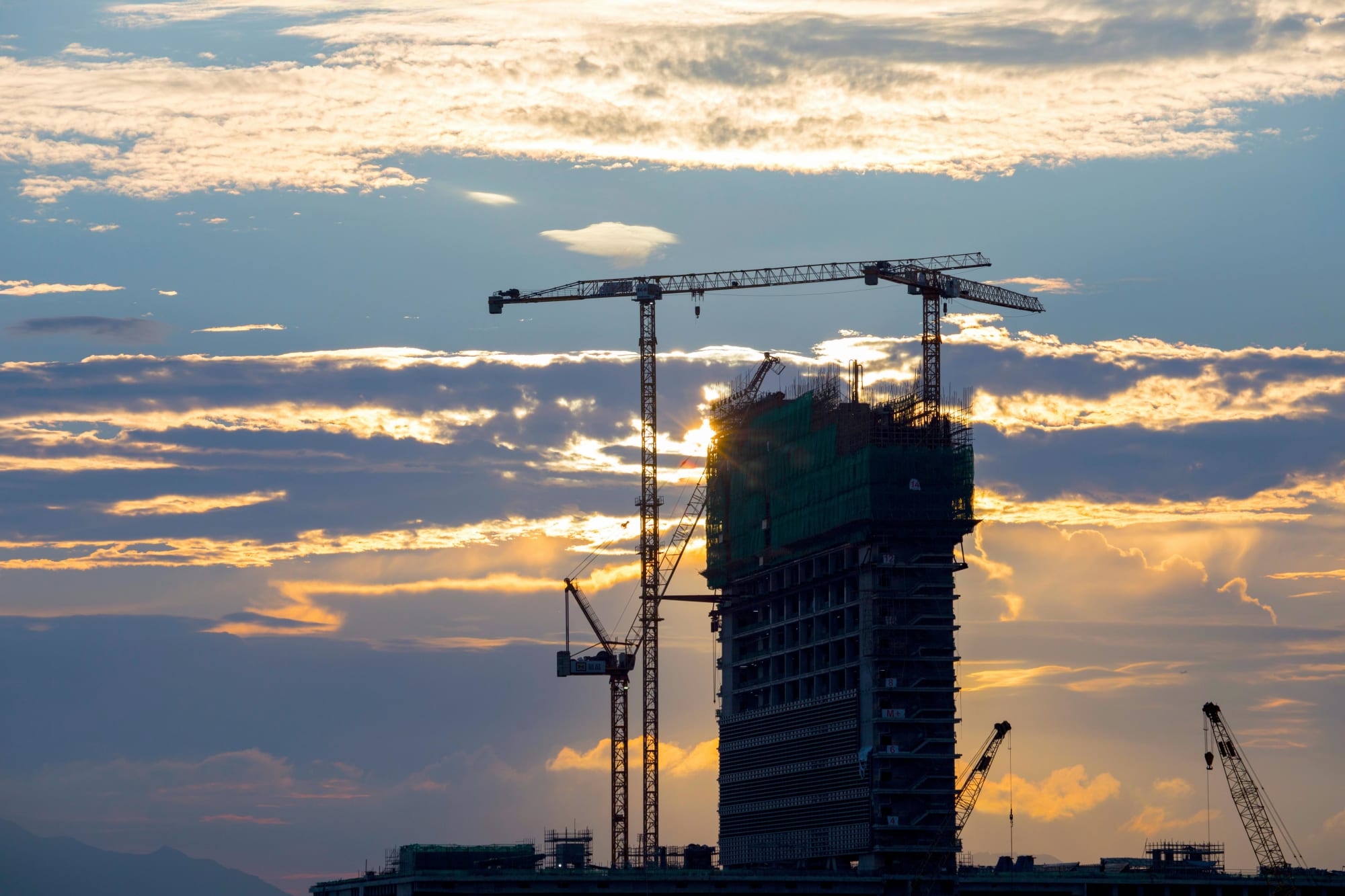
For all the focus on demand-side fixes, the decisive constraint in Australia’s housing market is on the supply side: projects simply don’t pencil out. As industry reporting highlights, developers are shelving mid-market apartments while high-end projects proceed, a signal of where margins survive. A 2025 economic briefing underscored the structural nature of the blockage: entrenched issues in construction are suppressing supply growth. With financing still tight and approvals sticky, the pipeline is thinning at the very moment population and rental demand remain robust.
The short answer: developers’ maths no longer works for mainstream housing
In feasibility terms, three forces have shifted at once: build costs, financing costs and time-to-completion. When materials and labour costs rise while debt becomes pricier and approvals stretch timelines, project internal rates of return (IRRs) are squeezed from all sides. Industry reporting has flagged first-home buyers stepping away from the apartment market and a tilt toward luxury builds — the latter can absorb inflation via higher presale prices; the former cannot.
This is not uniquely Australian. US new home sales softened in 2025 as higher borrowing costs curbed buyer capacity and developer appetite, even as rates eased from peaks. But Australia’s problem is sharper because supply was already undershooting household formation before the latest cost surge, and the construction sector must navigate both cyclical and structural frictions.
Market context: a pipeline under pressure
Signals from late 2024 to early 2025 are consistent: rising input costs and red tape continue to suppress housing delivery, slowing the flow of new dwellings that the country urgently needs. The result is textbook microeconomics — less supply meets steady or rising demand, pushing prices and rents higher and pushing would-be owners into longer tenancies.
Policy is nudging in the right direction but at limited scale. The Northern Australia Action Plan includes $88.8 million over three years from 2024–25 to grow the construction workforce and boost housing supply — helpful for capability, insufficient on its own to close the gap at national scale. Without faster approvals and lower build risk, new capital will not flood into mid-market projects.
The ROI stack: where feasibility breaks
Look at the developer’s value equation through a simple contribution model: revenue per square metre less all-in cost per square metre, adjusted for time and risk. Three breakpoints stand out:
- Cost base: Materials inflation and subbie rates have reset higher since 2022. Even if headline inflation moderates, construction costs tend to be sticky on the way down due to contracts, scarcity premiums and compliance requirements.
- Finance and pre-sales: Higher debt costs lift hurdle rates and amplify sensitivity to delays. Presales are harder to secure at price points the median buyer can afford, which pushes projects toward premium segments where buyers are less rate-sensitive.
- Time risk: Lengthy approvals and rework for compliance erode IRR. Every month added to the programme increases holding costs and exposes the project to price volatility.
In this environment, developers rationally triage: luxury towers, with larger per-unit gross margins, advance; mid-market projects stall; some builders pivot to non-residential or maintenance to survive. As one 2022 industry outlook presciently warned, rising costs would suppress build volumes — the 2025 evidence suggests that prediction largely landed.
Competitive dynamics: who can still win
Porter’s Five Forces reads differently in 2025–26. Supplier power has risen (labour, specialised trades, key materials), buyer power has weakened at the lower end (fewer viable projects, less choice), barriers to entry have increased (capital, compliance) and the threat of substitutes is shifting from traditional methods to industrialised construction.
- Scale developers and builders: Those with procurement muscle, diversified pipelines and in-house design/engineering can compress costs and time. They are better placed to lock in supply and hedge volatility.
- Patient capital: Super funds and build-to-rent sponsors with long-dated return horizons can underwrite delivery where merchant developers cannot. They monetise via yield rather than presales-driven margins.
- Luxury and niche segments: Premium projects clear the feasibility bar because buyers absorb a bigger share of cost inflation. This explains why upmarket builds remain in train while mainstream stock is deferred.
Implementation reality: de-risking delivery, not waiting for prices to fall
Executives should assume cost deflation will be slow and irregular. The actionable playbook focuses on risk transfer and productivity:
- Procurement and contracts: Move away from uncompensated fixed-price exposure on long programmes. Consider target cost plus gain-share, alliancing or early contractor involvement to surface buildability issues before they crystallise.
- Design for manufacturing and assembly (DfMA): Standardise components and adopt offsite fabrication to shorten critical paths and reduce site labour bottlenecks. Even partial modularisation (bathroom pods, facade systems) can shave weeks and contingency.
- Approvals acceleration: Partner early with councils and utilities; use digital submissions and parallel approvals to compress lead time. Delays are hidden cost multipliers; taking 10–15 percent out of programme duration often saves more than chasing 1–2 percent on materials.
- Capital structuring: Blend presales with institutional capital where possible; consider phased delivery to reduce working capital at risk. Where policy incentives exist, align projects to qualify.
Technology’s moment — if Australia can commercialise it
Construction tech will not solve cost inflation alone, but it can change the slope of the cost curve. Building information modelling (BIM) tied to 4D/5D scheduling enables clash detection and precise quantities, reducing rework and claims. Generative tools can optimise structural systems for material efficiency. Computer vision and IoT can tighten site productivity and safety. AI can automate take-offs, predict schedule risk and improve bid/no-bid decisions.
Yet Australia’s broader AI ecosystem has been characterised by an innovation-commercialisation gap, according to a 2025 landscape assessment. Governance maturity is growing — the Australian Government’s 2019 AI Ethics Principles and a 2024 consultation response signal a framework for responsible deployment — but uptake in tradable sectors lags. Translation: pilot more, operationalise faster. The edge will go to builders who embed data pipelines from design to handover and to councils that digitise approvals end-to-end.
Outlook to 2026: what to watch, what to do
Baseline: supply remains constrained through 2026, with pipeline growth capped by feasibility. Workforce initiatives and fee-free training help, but approvals friction and elevated input costs keep the brake on. Expect a continued bifurcation — premium and institutional projects proceed; mid-market stock remains scarce — keeping rents and entry-level prices under pressure.
Signals that would mark a turn: a measurable reduction in average approval times; evidence of cost stability in key inputs; broader adoption of risk-sharing contracts; and deployment of industrialised methods at meaningful scale. Without these, “more demand” policies will leak into prices, not new roofs.
What leaders should do now:
- Developers: Recut feasibilities with conservative contingencies; standardise designs; pre-qualify supply chains; and secure flexible financing structures.
- Builders: Invest in DfMA capabilities and site digitisation; renegotiate contract models that balance risk; and build a data backbone for predictive planning.
- Financiers: Back projects with demonstrable productivity uplifts and risk-sharing structures; tie capital to milestones and governance.
- Governments: Streamline approvals with digital portals; expand targeted workforce programmes; and calibrate incentives toward productivity-enhancing delivery models rather than pure demand stimulation.
RELATED ARTICLES

Property
Multigenerational living is moving mainstream: how agents, developers and lenders can monetise the shift
Australia’s quiet housing revolution is no longer a niche lifestyle choice; it’s a structural shift in demand that will reward property businesses prepared to redesign product, pricing and ...Read more

Property
Prestige property, precision choice: a case study in selecting the right agent when millions are at stake
In Australia’s top-tier housing market, the wrong agent choice can quietly erase six figures from a sale. Privacy protocols, discreet buyer networks and data-savvy marketing have become the new ...Read more

Property
From ‘ugly’ to alpha: Turning outdated Australian homes into high‑yield assets
In a tight listings market, outdated properties aren’t dead weight—they’re mispriced optionality. Agencies and vendors that industrialise light‑touch refurbishment, behavioural marketing and ...Read more

Property
The 2026 Investor Playbook: Rental Tailwinds, City Divergence and the Tech-Led Operations Advantage
Rental income looks set to do the heavy lifting for investors in 2026, but not every capital city will move in lockstep. Industry veteran John McGrath tips a stronger rental year and a Melbourne ...Read more

Property
Prestige property, precision choice: Data, discretion and regulation now decide million‑dollar outcomes
In Australia’s prestige housing market, the selling agent is no longer a mere intermediary but a strategic supplier whose choices can shift outcomes by seven figures. The differentiators are no longer ...Read more

Property
The new battleground in housing: how first-home buyer policy is reshaping Australia’s entry-level market
Government-backed guarantees and stamp duty concessions have pushed fresh demand into the bottom of Australia’s price ladder, lifting values and compressing selling times in entry-level segmentsRead more

Property
Property 2026: Why measured moves will beat the market
In 2026, Australian property success will be won by investors who privilege resilience over velocity. The market is fragmenting by suburb and asset type, financing conditions remain tight, and ...Read more

Property
Entry-level property is winning: How first home buyer programs are reshaping demand, pricing power and strategy
Lower-priced homes are appreciating faster as government support channels demand into the entry tier. For developers, lenders and marketers, this is not a blip—it’s a structural reweighting of demand ...Read more
Property
Multigenerational living is moving mainstream: how agents, developers and lenders can monetise the shift
Australia’s quiet housing revolution is no longer a niche lifestyle choice; it’s a structural shift in demand that will reward property businesses prepared to redesign product, pricing and ...Read more
Property
Prestige property, precision choice: a case study in selecting the right agent when millions are at stake
In Australia’s top-tier housing market, the wrong agent choice can quietly erase six figures from a sale. Privacy protocols, discreet buyer networks and data-savvy marketing have become the new ...Read more
Property
From ‘ugly’ to alpha: Turning outdated Australian homes into high‑yield assets
In a tight listings market, outdated properties aren’t dead weight—they’re mispriced optionality. Agencies and vendors that industrialise light‑touch refurbishment, behavioural marketing and ...Read more
Property
The 2026 Investor Playbook: Rental Tailwinds, City Divergence and the Tech-Led Operations Advantage
Rental income looks set to do the heavy lifting for investors in 2026, but not every capital city will move in lockstep. Industry veteran John McGrath tips a stronger rental year and a Melbourne ...Read more
Property
Prestige property, precision choice: Data, discretion and regulation now decide million‑dollar outcomes
In Australia’s prestige housing market, the selling agent is no longer a mere intermediary but a strategic supplier whose choices can shift outcomes by seven figures. The differentiators are no longer ...Read more
Property
The new battleground in housing: how first-home buyer policy is reshaping Australia’s entry-level market
Government-backed guarantees and stamp duty concessions have pushed fresh demand into the bottom of Australia’s price ladder, lifting values and compressing selling times in entry-level segmentsRead more
Property
Property 2026: Why measured moves will beat the market
In 2026, Australian property success will be won by investors who privilege resilience over velocity. The market is fragmenting by suburb and asset type, financing conditions remain tight, and ...Read more
Property
Entry-level property is winning: How first home buyer programs are reshaping demand, pricing power and strategy
Lower-priced homes are appreciating faster as government support channels demand into the entry tier. For developers, lenders and marketers, this is not a blip—it’s a structural reweighting of demand ...Read more