




Invest
Morrison unveils third stimulus package
The Morrison government has announced a third stimulus package designed to keep Australians in work as businesses struggle to mitigate costs following the coronavirus outbreak.
Morrison unveils third stimulus package

The Morrison government has announced a third stimulus package designed to keep Australians in work as businesses struggle to mitigate costs following the coronavirus outbreak.

The “unprecedented” package, worth $130 billion, aims to prevent firms from laying off employees in order to ensure the economy “bounces back” once the threat of the coronavirus has passed.
Businesses of all sizes will be eligible, while workers will need to have been employed by the business for more than 12 months to receive the payment. The payments will start in the first week of May and be backdated to March.
“We want to keep the engine of our economy running during this crisis,” Prime Minister Scott Morrison told media.
But the question remains of whether the lay-offs this part of the package seeks to avoid have already happened, with long lines for Centrelink support dominating the news last week amidst reports that a million people are already out of work.
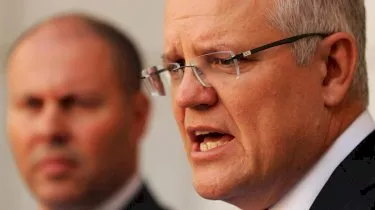
“We are working now to a whole new set of rules,” Prime Minister Morrison said, warning that some countries could see both their societies and economies collapse.
The latest package follows the first stimulus package worth $17 billion, which was aimed at retirees and the unemployed and a second $66 billion package designed to keep small businesses afloat as well as those who lost their job.
The Prime Minister announced this partner income threshold has been extended to $79,762 per annum, which was previously capped at $48,000.
Morrison said, however, that Australians will not be eligible for both the JobKeeper and the JobSeeker Payments.
“I would note, though, that many of those partners who are seeking those payment will obviously now in very many cases be covered by this job to the payment by remaining attached to their employers,” he said.
Unlike the first two stimulus packages, the third will help New Zealanders living in Australia on a 444 visa.
“New Zealanders on 444 visas don’t get access to the welfare system, but they can get access to this JobKeeper Payment,” Mr Morrison concluded.
RELATED ARTICLES
-

Australia’s spending surprise raises the odds of a February rate move — here’s how to protect margin and momentum
-

Australia’s inflation cools to 3.4% — why the RBA’s next move still isn’t a lay‑up for business
-

Inflation cools to 3.4% — but the RBA’s reaction function keeps businesses on a knife-edge
About the author

About the author

Economy
Australia’s spending surprise raises the odds of a February rate move — here’s how to protect margin and momentum
Household outlays are running hotter than economists expected, with the latest ABS readings showing broad-based gains across services and goods. That resilience is exactly the kind of demand impulse ...Read more
Economy
Australia’s inflation cools to 3.4% — why the RBA’s next move still isn’t a lay‑up for business
Headline inflation easing is good optics; balance sheets feel something different. With year‑on‑year CPI down to 3.4% in November from 3.8%, hopes for rate relief are rising — but policymakers remain ...Read more
Economy
Inflation cools to 3.4% — but the RBA’s reaction function keeps businesses on a knife-edge
Australia’s headline CPI edged down to 3.4% year-on-year in November, from 3.8%, easing immediate pressure but not eliminating the risk of further tightening. With services inflation sticky and ...Read more

Economy
Higher-for-longer, not higher forever: How Australia’s inflation ‘surprise’ is rewriting CFO playbooks for 2026
Australia’s latest inflation pulse eased but didn’t budge bank outlooks: near‑term rate cuts are still a long shot, with some houses flagging upside risk. That steadier‑for‑longer cash rate is pushing ...Read more

Economy
Australia's inflation illusion: the real challenge lies in pricing power and productivity
Headline inflation has cooled to 3.4% year-on-year, but the Reserve Bank’s caution—and a still‑hot housing backdrop—mean the rate threat hasn’t left the room. For boards, the next few quarters are ...Read more

Economy
When house prices lift, tills ring: A case study in turning Australia’s wealth effect into growth
Australia’s latest upswing in household wealth, anchored by higher dwelling values, is more than a feel‑good statistic—it is a profit and planning signal. The ABS notes property’s centrality to ...Read more

Economy
RBA's hawkish stance reflects inflation concerns, State Street economist comments
In a recent statement, the Reserve Bank of Australia (RBA) has signaled a hawkish stance on interest rates, drawing insights from financial experts about the implications for Australia's economic ...Read more

Economy
Navigating the inflation maze: How CFOs can outsmart economic hurdles in Australia
Fresh inflation data have cooled expectations of near-term rate cuts in Australia, intensifying pressure on margins, capital allocation and demand. Rather than wait for monetary relief that may not ...Read more
Economy
Australia’s spending surprise raises the odds of a February rate move — here’s how to protect margin and momentum
Household outlays are running hotter than economists expected, with the latest ABS readings showing broad-based gains across services and goods. That resilience is exactly the kind of demand impulse ...Read more
Economy
Australia’s inflation cools to 3.4% — why the RBA’s next move still isn’t a lay‑up for business
Headline inflation easing is good optics; balance sheets feel something different. With year‑on‑year CPI down to 3.4% in November from 3.8%, hopes for rate relief are rising — but policymakers remain ...Read more
Economy
Inflation cools to 3.4% — but the RBA’s reaction function keeps businesses on a knife-edge
Australia’s headline CPI edged down to 3.4% year-on-year in November, from 3.8%, easing immediate pressure but not eliminating the risk of further tightening. With services inflation sticky and ...Read more
Economy
Higher-for-longer, not higher forever: How Australia’s inflation ‘surprise’ is rewriting CFO playbooks for 2026
Australia’s latest inflation pulse eased but didn’t budge bank outlooks: near‑term rate cuts are still a long shot, with some houses flagging upside risk. That steadier‑for‑longer cash rate is pushing ...Read more
Economy
Australia's inflation illusion: the real challenge lies in pricing power and productivity
Headline inflation has cooled to 3.4% year-on-year, but the Reserve Bank’s caution—and a still‑hot housing backdrop—mean the rate threat hasn’t left the room. For boards, the next few quarters are ...Read more
Economy
When house prices lift, tills ring: A case study in turning Australia’s wealth effect into growth
Australia’s latest upswing in household wealth, anchored by higher dwelling values, is more than a feel‑good statistic—it is a profit and planning signal. The ABS notes property’s centrality to ...Read more
Economy
RBA's hawkish stance reflects inflation concerns, State Street economist comments
In a recent statement, the Reserve Bank of Australia (RBA) has signaled a hawkish stance on interest rates, drawing insights from financial experts about the implications for Australia's economic ...Read more
Economy
Navigating the inflation maze: How CFOs can outsmart economic hurdles in Australia
Fresh inflation data have cooled expectations of near-term rate cuts in Australia, intensifying pressure on margins, capital allocation and demand. Rather than wait for monetary relief that may not ...Read more