



Invest
Gold market sees mixed signals as ETF flows slow and rate hike expectations mount
Invest
Gold market sees mixed signals as ETF flows slow and rate hike expectations mount
In May 2026, the gold market experienced a slight decline, with prices falling by 1% to US$4,546 per ounce, according to the latest reports from the World Gold Council (WGC). This drop was attributed to improved risk appetite among investors and a shift in expectations towards a potential interest rate hike by the US Federal Reserve later this year. Despite these challenges, the WGC suggests that the relationship between gold prices and rate hikes is not as straightforward as traditionally believed.
Gold market sees mixed signals as ETF flows slow and rate hike expectations mount

In May 2026, the gold market experienced a slight decline, with prices falling by 1% to US$4,546 per ounce, according to the latest reports from the World Gold Council (WGC). This drop was attributed to improved risk appetite among investors and a shift in expectations towards a potential interest rate hike by the US Federal Reserve later this year. Despite these challenges, the WGC suggests that the relationship between gold prices and rate hikes is not as straightforward as traditionally believed.
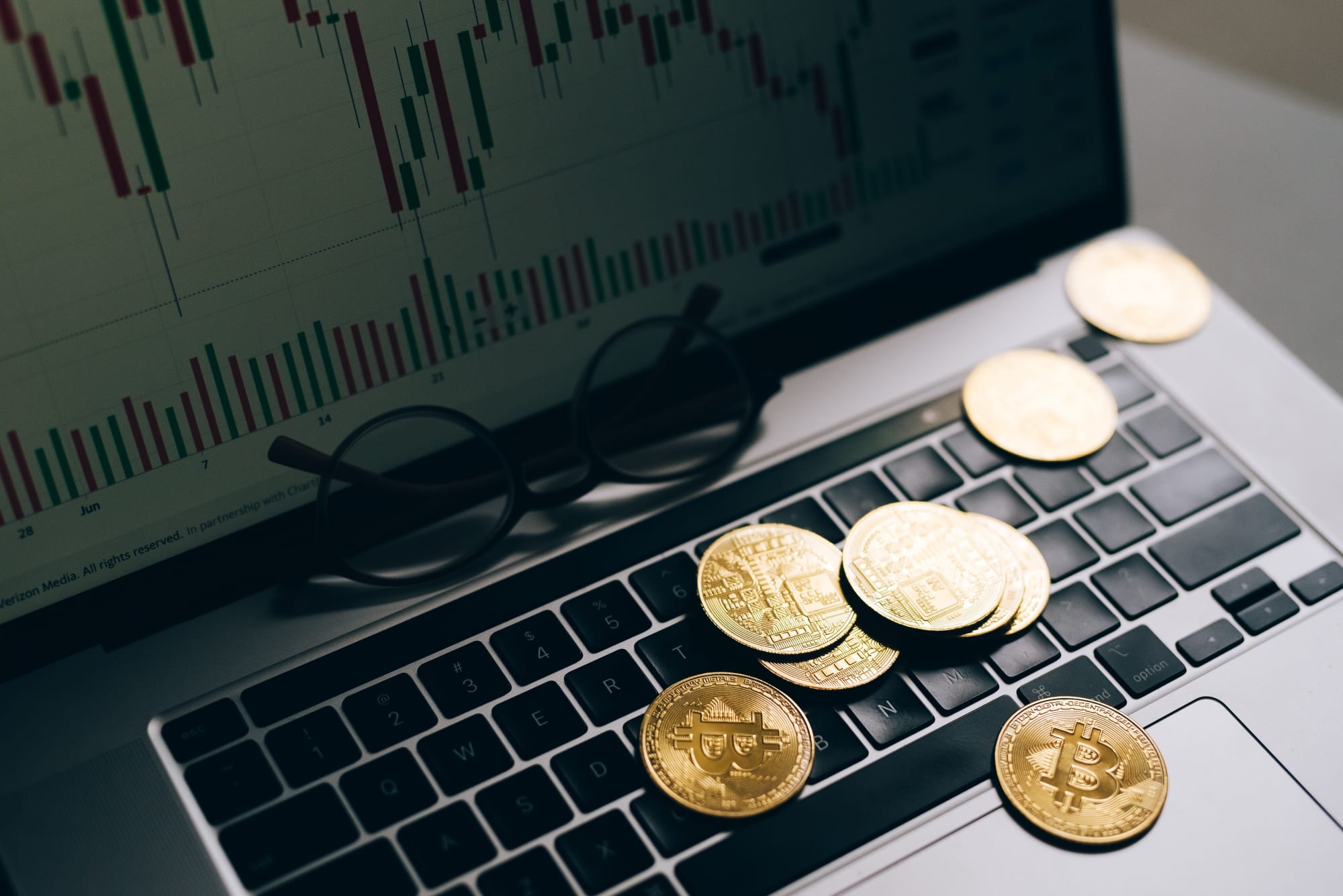
"Convention has it that higher policy rates should pressure gold through higher real yields and a stronger US dollar," the WGC noted. However, they argue that "the evidence is mixed," pointing to historical instances where gold has outperformed following policy tightening, especially when such hikes raised concerns about economic growth, financial stability, or policy credibility.
The WGC's analysis highlights that while gold is facing headwinds, it could surprisingly benefit from a rate hike. They argue that "gold has positively surprised on hikes more than 50% of the time," with its median one-month return following hikes being positive. This is contingent on how markets interpret the implications of tightening for growth, inflation credibility, financial stability, and the US dollar.
In terms of regional performance, Europe was the only area to see inflows into gold-backed exchange-traded funds (ETFs), with an increase of US$334 million. This was largely driven by the UK amidst political uncertainty and concerns about the government's fiscal position. Conversely, Asia and North America experienced significant outflows, with Asia witnessing a reversal of flows for the first time since August 2025, amounting to US$1.2 billion, and North America seeing outflows of US$1.1 billion.
"Beyond price action, the opportunity cost of holding gold has also risen amid US dollar strength, higher rates, and adjusted expectations for the future path of US rates," the WGC explained. This has led investors to move to the sidelines while awaiting a clearer catalyst.
Despite the global pullback, gold ETF flows remain positive for the year-to-date, amassing nearly US$17 billion. Global gold ETF assets under management (AUM) declined by 2% month-over-month to US$604 billion, while holdings eased to 4,121 tonnes, just shy of February's record high.
The report also highlighted the mixed signals from the market, noting that "a hike may counterintuitively benefit gold when it happens." The WGC believes that "in prior cycles, hikes often signalled policy credibility and economic normalisation," but in the current climate, hikes may increasingly signal persistent inflation pressure, fiscal stress, and policy error risk.
The WGC pointed to notable historical precedents where gold responded positively to rate hikes. For example, on 29 June 2006, gold was buoyed by concerns over a slowing housing market and mounting growth concerns. Similarly, on 15 March 2017, the hike was interpreted as dovish relative to expectations, leading to a decline in long-end yields.
However, the WGC cautions that the largest near-term risk may come from energy markets. "A sharp rise in energy prices driven by inventory depletion could initially push yields higher, strengthen the dollar, and extend gold's current malaise before the longer-term implications become apparent," they warned.
In terms of trading activity, global gold market trading volumes increased slightly by 3% month-over-month to US$424 billion per day in May, remaining 15% above the 2025 average. Over-the-counter volumes rose by 1% to US$243 billion per day, while exchange-traded activity grew by 6% to US$175 billion per day, driven by higher COMEX activity.
Overall, the gold market is navigating a complex landscape of mixed signals, with potential rate hikes, geopolitical tensions, and energy market dynamics all playing a role. As investors await a clearer catalyst, the WGC's analysis suggests that gold's response to these factors may not be as predictable as conventional wisdom suggests.
RELATED ARTICLES
Commodity
Gold prices remain stable amid geopolitical tensions and market dynamics
April 2026 saw the gold market in a state of equilibrium as the precious metal ended the month flat at US$4,611 per ounce. Despite the geopolitical tensions stemming from the Middle East crisis and ...Read more

Commodity
Record gold prices continue to shift demand dynamics
In a period marked by economic uncertainty and geopolitical tensions, the allure of gold has intensified, pushing demand and prices to unprecedented heights. The World Gold Council's latest report on ...Read more

Commodity
Gold's March tumble: Unpacking the dynamics behind the decline
In a month marked by unexpected volatility, gold experienced its steepest decline since June 2013, with prices falling by 12% to US$4,608 per ounce. This dramatic downturn in March was not driven by ...Read more
Commodity
Gold’s role in Australian portfolios amid economic uncertainties
As Australia grapples with resurgent inflation and the Reserve Bank of Australia's (RBA) decision to resume interest rate hikes, the spotlight is once again on gold's strategic role in investment ...Read more

Commodity
World Gold Council unveils initiative to transform digital gold landscape
In a groundbreaking move poised to reshape the digital gold market, the World Gold Council (WGC) has announced a new initiative aimed at building a shared infrastructure to facilitate the development ...Read more
Commodity
Gold shines as dollar weakens amid geopolitical tensions
Gold prices surged by 5% in February, reaching an impressive US$5,222 per ounce, driven by a combination of a weakening US dollar, softer US Treasury yields, and increased dip buying. This marks a ...Read more
Commodity
Gold’s rally surpasses US$5,000 amid bond volatility concerns
In an extraordinary start to the year, gold prices have surged past the US$5,000 mark, marking a significant milestone in the precious metal's market. January witnessed a remarkable 14% rally, closing ...Read more
Commodity
Gold ETF inflows soar to record highs amid market volatility
In a remarkable start to the new year, global gold exchange-traded funds (ETFs) have witnessed unprecedented inflows, pushing their total assets under management (AUM) and collective holdings to ...Read more
Commodity
Gold prices remain stable amid geopolitical tensions and market dynamics
April 2026 saw the gold market in a state of equilibrium as the precious metal ended the month flat at US$4,611 per ounce. Despite the geopolitical tensions stemming from the Middle East crisis and ...Read more
Commodity
Record gold prices continue to shift demand dynamics
In a period marked by economic uncertainty and geopolitical tensions, the allure of gold has intensified, pushing demand and prices to unprecedented heights. The World Gold Council's latest report on ...Read more
Commodity
Gold's March tumble: Unpacking the dynamics behind the decline
In a month marked by unexpected volatility, gold experienced its steepest decline since June 2013, with prices falling by 12% to US$4,608 per ounce. This dramatic downturn in March was not driven by ...Read more
Commodity
Gold’s role in Australian portfolios amid economic uncertainties
As Australia grapples with resurgent inflation and the Reserve Bank of Australia's (RBA) decision to resume interest rate hikes, the spotlight is once again on gold's strategic role in investment ...Read more
Commodity
World Gold Council unveils initiative to transform digital gold landscape
In a groundbreaking move poised to reshape the digital gold market, the World Gold Council (WGC) has announced a new initiative aimed at building a shared infrastructure to facilitate the development ...Read more
Commodity
Gold shines as dollar weakens amid geopolitical tensions
Gold prices surged by 5% in February, reaching an impressive US$5,222 per ounce, driven by a combination of a weakening US dollar, softer US Treasury yields, and increased dip buying. This marks a ...Read more
Commodity
Gold’s rally surpasses US$5,000 amid bond volatility concerns
In an extraordinary start to the year, gold prices have surged past the US$5,000 mark, marking a significant milestone in the precious metal's market. January witnessed a remarkable 14% rally, closing ...Read more
Commodity
Gold ETF inflows soar to record highs amid market volatility
In a remarkable start to the new year, global gold exchange-traded funds (ETFs) have witnessed unprecedented inflows, pushing their total assets under management (AUM) and collective holdings to ...Read more